- All e-books and audiobooks on The New Life Mission website are free
- Explore multilingual sermons in global languages
- Two new revised editions in English have been released
- Check out our website translated into 27 languages

Due to COVID-19 and disruption to international mail service
we have temporally suspended our ‘Free Print Book service’.
In the light of this situation we are not able to mail you the books at this time.
Pray that this pandemic will end soon and the resumption of the postal service.
Pray that this pandemic will end soon and the resumption of the postal service.


Subject 30 : 1 Corinthians — Biblical Exposition & Sermons
[71-1] The Message to the Divided Corinthian Church (1 Corinthians 1)
[The Power of God Manifested Not by Human Wisdom but by the Gospel of the Water and the Spirit]
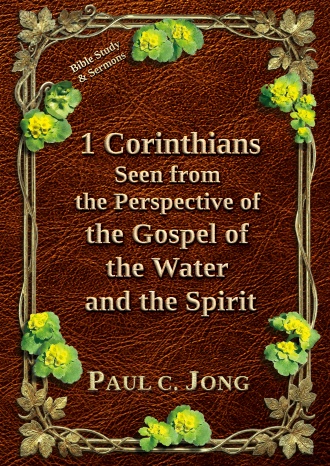
This biblical exposition is taken from Chapter 1 of Rev. Paul C. Jong's book 1 Corinthians Seen from the Perspective of the Gospel of the Water and the Spirit
♫ Audio version available — ► Listen on SoundCloud · ↓ Download audio (26 MB)
The Background of Writing the Letter of 1 Corinthians
To understand 1 Corinthians, we must first look at the relationship between the Apostle Paul and the Corinthian church, and the various problems that occurred within the Corinthian church at that time. 1 Corinthians is not a simple doctrinal manual, but a very practical pastoral epistle written by the Apostle Paul to solve the problems that actually occurred within the church.
First, the Corinthian church was a church established by the Apostle Paul during his second missionary journey. This event is recorded in Acts 18. Paul stayed in Corinth for about 1 year and 6 months preaching the gospel, and as a result, a church where Jews and Greeks gathered together was established.
Corinth was a very important commercial city in the Roman Empire at that time. In today's terms, it was like an international trade city. Located on the isthmus connecting mainland Greece and the Peloponnese peninsula, this city was the center where East-West trade passed through. Diverse ethnicities and cultures were gathered, and although it was economically very prosperous, it was famous for being a morally very corrupt city.
In particular, there was the temple of Aphrodite in Corinth, where there were many temple prostitutes, and the entire city was deeply influenced by a culture of sexual immorality and idolatry. Because the church was established in such an environment, the culture and values of the world continued to enter into the church as well.
Even after Paul left Corinth, the church continued to grow, but at the same time, various problems began to occur. These problems are the direct background for writing 1 Corinthians.
The first problem was the division that arose within the church. Factions were formed in the church as some people said they followed Paul, some followed Apollos, and some followed Peter. This problem appears in 1 Corinthians 1. Paul saw this as a very serious problem. This is because the gospel is not about gathering around people, but becoming one around Christ.
The second problem was that serious moral corruption had entered the church. Even though there was a case where someone lived with his father's wife, the church was not dealing with it properly. Paul strongly rebukes this and says that the church must restore its holiness.
The third problem was disputes among the saints. The matter of taking problems within the church to secular courts and suing one another occurred. Paul points out that this is something that destroys the testimony of the church.
The fourth problem was questions about marriage and celibacy. At that time, the saints had much confusion about whether they should marry, whether celibacy was better, and whether they should live with an unbelieving spouse. Paul provides practical guidelines for these questions.
The fifth problem was the issue of food offered to idols. Because Corinth was a city with very strong idolatry, most of the meat sold in the market was related to idol sacrifices. Some saints thought "an idol is nothing" and ate freely, but other saints could not accept it due to matters of conscience. Because of this issue, conflict arose within the church.
The sixth problem was the confusion of worship order. In particular, many problems appeared in the Lord's Supper and the use of spiritual gifts. When sharing the Lord's Supper, there were instances of ignoring the poor, and order was also broken in the process of using gifts such as speaking in tongues and prophecy.
The seventh problem was wrong thoughts about the resurrection. Some people even denied the resurrection of the dead. Paul very strongly explains the gospel of the resurrection in 1 Corinthians 15. He says that the resurrection of Christ is the center of the gospel, and without it, faith is also in vain.
Summarizing all these situations, 1 Corinthians was written for two reasons. One was to correct the various problems reported within the Corinthian church, and the other was to answer the questions the saints sent to Paul.
Ultimately, 1 Corinthians is not simply a letter pointing out problems, but a letter that shows again what the church must stand upon. Paul emphasizes the fact that the center of the church must not be a person, nor culture, nor philosophy, but only the gospel of Jesus Christ. Therefore, 1 Corinthians can be said to be a book that answers the question, "Upon what does the church stand?" directed toward a church in the midst of confusion.
What is the difference between God's church and the world's church?
1Paul, called to be an apostle of Jesus Christ through the will of God, and Sosthenes our brother,
2To the church of God which is at Corinth, to those who are sanctified in Christ Jesus, called to be saints, with all who in every place call on the name of Jesus Christ our Lord, both theirs and ours:
3Grace to you and peace from God our Father and the Lord Jesus Christ.
(1 Corinthians 1:1-3)
God's church and the world's church may seem to have no great difference when looking at their outward appearance. This is because both use the Bible, hold worship services, sing hymns, and listen to sermons. However, looking by the standard of the Bible, a fundamental difference exists between the two churches. That difference is not in the building or organization, but in the content of the gospel and the faith that believes in that gospel.
First, God's church is the church established by God. In the Bible, the church does not mean a religious institution made by humans, but a gathering of people who believe in the gospel of Jesus Christ.
Acts 2:47 records, "And the Lord added to the church daily those who were being saved." That is, the church is not an organization made by people recruiting members, but a community formed by God gathering those who have been saved.
At the center of this church, the gospel of the water and the Spirit is being testified. It testifies to the gospel that Jesus received baptism from John the Baptist to have the sins of the world transferred to Him, received the judgment of sins on the cross, and resurrected from death to save those who believe.
God's church is a community that believes in this gospel of the water and the Spirit and testifies to that gospel. Therefore, this church of God does not demand human righteousness but stands centered on the redemption of Jesus Christ.
On the other hand, the world's church uses the name of a church outwardly, but its center is not on the gospel of the water and the Spirit, but is placed under a religious system.
In such a church, the standard of salvation is not placed on the word of truth that Jesus received baptism from John to have the sins of the world transferred to Him and received the judgment of sins on the cross. Therefore, the center of the sermon also has more moral and exhortative demands to the church members such as "live more kindly," "serve more diligently," "be more dedicated," and "be more loyal," rather than the ministry of Jesus' baptism and the ministry of the cross that received the punishment of sins.
In this structure, the assurance of the gospel that the problem of human sin has been fundamentally solved weakens, and faith easily degenerates into religious duty or culture.
Another important difference is the issue of who the owner of the church is. In God's church, the head of the church is only Jesus Christ.
Ephesians 1:23 says, "which is His body, the fullness of Him who fills all in all." Therefore, the direction and standard of God's church are not aimed at human thoughts or the trends of the times, but at the word of God and the preaching of the gospel of the water and the Spirit.
However, the world's church often moves centered on human influence, the maintenance of the organization, the expansion of church power, and social influence. When this happens, the maintenance and growth of the organizational institution become a more important goal than the essence of the church.
Also, a difference appears in the issue of how to handle the problem of sin. God's church clearly teaches the gospel word of the water and the Spirit by preaching the fact that Jesus received baptism from John to have the sins of the world transferred to Him, which ended with the judgment of sins on the cross.
It testifies that, through the word that Jesus received baptism, thereby having the sins of the world transferred to Him, received the judgment for sins on the Cross, and was resurrected from death, He washed away people's sins and gave salvation to those who believe. Because of this, it clearly proclaims that salvation is achieved not by human deeds but by faith that believes in the righteousness of God.
However, in the world's church, because they must solve all the sins that church members commit, they emphasize prayers of repentance and prayers to become sanctified. In this structure, church members live their religious lives always suffering from guilt and pain.
Ultimately, the most fundamental difference between the two churches is this. God's church is a church established upon the gospel word of the water and the Spirit, and the world's church becomes a church established upon the theological doctrines of its denomination.
God's church is a community of those who believe the truth that Jesus Christ received the transfer of the sins of the world through the baptism He received from John, and received the judgment of sins on the cross to give salvation to those who believe.
However, the world's church has become a community that lives for the development of the denomination, centered on human-established theological systems and religious activities rather than the gospel of the water and the Spirit.
Therefore, the Bible asks a more important question to all of us. It is not "Which church do I belong to?" but "Do I believe the true gospel word of the water and the Spirit in my heart?"
The Bible says that the church is the gathering of those who have received the removal of sins by believing in their hearts in the Lord who received the transfer of the sins of the world through the baptism He received from John, was killed on the cross, and resurrected.
Paul says he is "Called to be an apostle of Jesus Christ through the will of God." This confession is not limited only to the apostleship.
It means that the Lord places the purpose on God's calling within the gospel of the water and the Spirit. When viewing God's calling of us from the perspective of the gospel of the water and the Spirit, it is not in religious achievements built up by one's own determination, but in the preaching of the gospel intended to be accomplished within the purpose of salvation that God Himself planned and fulfilled.
Therefore, preaching to the whole world the gospel word of the water and the Spirit—that Jesus received the transfer of the sins of the world through the baptism He received from John and accomplished the completion of salvation by shedding His blood on the cross—appears as the will of God.
What do the gifts given by God refer to?
4I thank my God always concerning you for the grace of God which was given to you by Christ Jesus,
5that you were enriched in everything by Him in all utterance and all knowledge,
6even as the testimony of Christ was confirmed in you,
7so that you come short in no gift, eagerly waiting for the revelation of our Lord Jesus Christ,
8who will also confirm you to the end, that you may be blameless in the day of our Lord Jesus Christ.
9God is faithful, by whom you were called into the fellowship of His Son, Jesus Christ our Lord.
(1 Corinthians 1:4-9)
The gifts given by God refer to the talents that God gives freely to those who believe. Gifts are not qualifications or rewards that a person obtains through effort, but talents that God tells us to use for His will and the church.
That is why the Bible calls this a "gift." The word gift itself has the meaning of "a gift of grace given freely."
The gifts spoken of in the Bible can be largely understood in two meanings. One is that the salvation given by God itself is the greatest gift, and the other is that they are various talents given to the saved to preach the gospel.
First, looking from the most fundamental meaning, the removal of sins is God's gift. Romans 6:23 says, "For the wages of sin is death, but the gift of God is eternal life in Christ Jesus our Lord." The gift spoken of here is, namely, the gift of salvation received by believing in the righteousness of Jesus Christ.
Because a person cannot become righteous before God by their own deeds, God the Father saved those who believe from their sins through the baptism Jesus received from John and the judgment of the cross. And to those who have received the removal of sins, He gave the Holy Spirit of God as a gift.
The word of the Bible distributes the gifts of the Holy Spirit to those who believe in the gospel word of the water and the Spirit from their own sins. These gifts are not for personal glory but are talents for serving God's church.
1 Corinthians 12, explaining these gifts, says that the Holy Spirit has distributed various gifts to each person. For example, the word of wisdom, the word of knowledge, faith, gifts of healings, working of miracles, prophecy, discerning of spirits, tongues, and interpretation of tongues are mentioned.
However, what is important here is the purpose of the gifts. The purpose for which God gives gifts is not for the individual, but for God's church and to make them serve the gospel of the water and the Spirit.
Ephesians 4 says that God gave some to be apostles, some prophets, some evangelists, and some pastors and teachers. And it explains the reason as, "for the equipping of the saints for the work of ministry, for the edifying of the body of Christ" (Ephesians 4:12).
Also, the gifts given by God are given differently to each person. Not everyone receives the same gift. Some people have the gift of teaching, some people have the gift of serving, and some people have the gift of preaching the gospel.
Romans 12 speaks of various gifts such as prophecy, serving, teaching, exhortation, giving, and leading, and exhorts to serve the church according to the gift each person has received.
Therefore, the gifts spoken of in the Bible have three important characteristics.
First, gifts are presents given by God. They are not abilities that a person creates through effort. Second, gifts are given to build up the church. They are not for personal glory or boasting. Third, gifts are given variously to different people. Thus, the church is a community formed together by people with different gifts.
Ultimately, at the center of the gifts given by God, there is always the purpose for preaching the gospel of the water and the Spirit and the purpose for serving the gathering of the church.
God gives some people the gift of understanding and preaching God's word, and gives some people the gift of serving the saints, so that the members cooperate with each other and grow. Therefore, the Bible teaches not to make gifts an object of boasting, but to use them humbly as tools to serve God and build up the church.
The gifts given by God are ultimately not for exalting people, but are gifts to preach God's gospel of the water and the Spirit so that God's church may be established on this earth.
Paul tells the Corinthian church that they come short in no spiritual gift in Him. The reason this declaration is possible is because they were already standing on the completed gospel of the water and the Spirit.
When viewed from the perspective of the gospel of the water and the Spirit, believers are those who have already been saved from their own sins, not those who have still not had their sins resolved.
Rather, they are those who have been established to preach the gospel word of the water and the Spirit by believing in the salvation already completed in Jesus Christ.
Why do conflicts arise in God's church?
1 Corinthians 1:10-17
10Now I plead with you, brethren, by the name of our Lord Jesus Christ, that you all speak the same thing, and that there be no divisions among you, but that you be perfectly joined together in the same mind and in the same judgment.
Read the full passage (7 more verses) ▾
11For it has been declared to me concerning you, my brethren, by those of Chloe's household, that there are contentions among you.
12Now I say this, that each of you says, "I am of Paul," or "I am of Apollos," or "I am of Cephas," or "I am of Christ."
13Is Christ divided? Was Paul crucified for you? Or were you baptized in the name of Paul?
14I thank God that I baptized none of you except Crispus and Gaius,
15lest anyone should say that I had baptized in my own name.
16Yes, I also baptized the household of Stephanas. Besides, I do not know whether I baptized any other.
17For Christ did not send me to baptize, but to preach the gospel, not with wisdom of words, lest the cross of Christ should be made of no effect.
The reasons why conflicts arise in God's church may outwardly seem like various problems, but from the perspective of the Bible, the fundamental causes can be summarized into a few points. The church is a community established by God, but because the people within it are still weak human beings, various conflicts can appear.
First, conflicts arise when a person's fleshly thoughts take precedence. The Apostle Paul, pointing out the conflicts within the Corinthian church in 1 Corinthians 3, says, "for you are still carnal. For where there are envy, strife, and divisions among you, are you not carnal and behaving like mere men?" Although the church is a spiritual community, when a person puts their own thoughts, pride, emotions, and interests first, conflicts naturally occur. When a self-centered mind takes precedence rather than being God-centered, conflicts begin.
Second, conflicts arise when looking at the church centering on people. In the Corinthian church, factions such as "I belong to Paul" and "I belong to Apollos" arose. Paul rebukes this and says, "Who then is Paul, and who is Apollos?"
The center of the church is not a person but only Jesus Christ, and the purpose is the preaching of the gospel of the water and the Spirit. However, when people begin to judge their faith centering on leaders, traditions, organizations, or specific figures, taking sides and conflicts naturally arise.
Third, conflicts arise when the essence and purpose of the gospel of the water and the Spirit are not accurately understood. Even in the early church, conflicts arose due to differences in understanding the gospel of the water and the Spirit.
In Acts 15, a great debate occurred over the issue of the law. Some argued that Gentiles must also be circumcised to be saved, but the apostles reaffirmed the essence of the gospel and made it clear that salvation is accomplished not by human deeds but by the word of truth of the gospel of the water and the Spirit given by God.
If other standards take precedence over the purpose of preaching the gospel within God's church, spiritual conflicts easily arise.
Fourth, conflicts arise when the purpose of the church is forgotten. The church is not an organization that gathers people's opinions, but a community purposed to establish God's church to testify to the gospel of the water and the Spirit. However, when the purpose of the church becomes blurred and personal opinions, emotions, interests, and honor become the center, conflicts arise. In such cases, people try to prove that their own thoughts are right rather than God's will, and in that process, conflicts grow.
Fifth, Satan also causes conflicts to shake God's church. The Bible says that one of the various ways Satan attacks God's church is through division and conflict.
When God's church tries to preach the gospel of the water and the Spirit and convey God's will, Satan tries not only to attack the church from the outside but also to make them fight each other from the inside. Therefore, the Bible exhorts the saints not to oppose each other but to endeavor to keep the oneness of the gospel of the water and the Spirit.
However, the important fact is this. Conflicts can arise within the church, but the church established by God is originally a community that becomes one in the gospel of Christ.
Ephesians 4 tells the saints, "Endeavoring to keep the unity of the Spirit in the bond of peace" (Ephesians 4:3). When the center of the church is on preaching the gospel of the water and the Spirit, conflicts decrease and God's church can be established as one again.
Ultimately, the biggest reason why conflicts arise in God's church is when man takes precedence over God.
However, when the center of the church returns again to the gospel of the water and the Spirit of Jesus Christ, conflicts and disputes disappear, and the church can be restored to its original form as the community that is the body of God.
Within the Corinthian church, conflicts arose saying, "I belong to Paul," "I belong to Apollos," "I belong to Cephas," and "I belong to Christ." To this, Paul firmly asks, "Is Christ divided?"
The root of this conflict is because the standard of the gospel of the water and the Spirit—the gospel of truth in which Jesus was baptized by John, had the sins of the world passed onto Him, received the judgment of sins on the cross, and accomplished salvation for those who believe—had its focus shifted to another side.
The reason Paul said, "For Christ did not send me to baptize, but to preach the gospel" (1 Corinthians 1:17), was that the purpose should be placed on preaching the gospel word of the water and the Spirit. That is because factions arose due to relationships with each evangelist.
What Paul warns against is the faith that exalts man, and the illusion that comes from trying to corrupt the gospel word of the water and the Spirit with human philosophy and rhetoric.
It is because they did not cling to the gospel of the water and the Spirit, that is, the gospel word that Jesus had the sins of the world passed onto Him through the baptism He received from John, and shed His blood on the cross to accomplish our salvation.
The saints can fall into the sin that comes from being swayed by the evangelist's character and eloquence, respecting that person's speech more than the power of the gospel word. We must know this fact.
What is the relationship between the gospel of the water and the Spirit and the word of the cross?
1 Corinthians 1:18-25
18For the message of the cross is foolishness to those who are perishing, but to us who are being saved it is the power of God.
19For it is written: "I will destroy the wisdom of the wise, And bring to nothing the understanding of the prudent."
Read the full passage (6 more verses) ▾
20Where is the wise? Where is the scribe? Where is the disputer of this age? Has not God made foolish the wisdom of this world?
21For since, in the wisdom of God, the world through wisdom did not know God, it pleased God through the foolishness of the message preached to save those who believe.
22For Jews request a sign, and Greeks seek after wisdom;
23but we preach Christ crucified, to the Jews a stumbling block and to the Greeks foolishness,
24but to those who are called, both Jews and Greeks, Christ the power of God and the wisdom of God.
25Because the foolishness of God is wiser than men, and the weakness of God is stronger than men.
The gospel of the water and the Spirit and the word of the cross are not different gospels. It tells us that these two are connected as a two-step structure that accomplishes one salvation.
In other words, if the gospel of the water and the Spirit is a structure that encompasses the entire redemptive ministry of Jesus Christ, the word of the cross points to the ministry of the judgment of sins where that redemptive ministry is completed. These two cannot be separated from each other, and only when they are understood together is the gospel word of the water and the Spirit fully revealed.
First, the "water" spoken of in the gospel of the water and the Spirit points to the ministry of Jesus being baptized by John the Baptist in the Jordan River.
In Matthew 3:13-15, as Jesus was baptized by John the Baptist, He said, "For thus it is fitting for us to fulfill all righteousness."
The baptism Jesus received from John was not a simple ceremony, but an event in which the sins of the world were passed onto Jesus' body. Just as a sinner in the Old Testament sacrificial offering laid hands on the sacrificial offering to pass on their sins, Jesus transferred all the sins of this world onto His own body once and for all through the baptism He received from John.
It says that this ministry of baptism was Jesus' ministry that passed the sins of the world onto Jesus' body. The event that appears next is exactly the word of the cross.
After Jesus had the sins of the world passed onto Him through the baptism given by John, He was crucified, shed His blood, and was killed. The cross is not a simple symbol of suffering, but the place where God's judgment was executed upon the sins of the world that He had already shouldered through baptism.
That is, the gospel of the water and the Spirit is the structure of salvation in which the sins of the world are passed onto Jesus' body through baptism, and the punishment for those sins is completed on the cross.
The relationship between the gospel of the water and the Spirit and the word of the cross can be explained like this. The baptism Jesus received from John is the event where the sins of the world are passed onto Jesus' body, and the cross is the event where the judgment for those sins is accomplished.
Here, if there were no ministry of the baptism Jesus received from John, the judgment of sins would not be accomplished on the cross, so redemption could not be completed. When the two events are together, the redemption of Jesus Christ is completed within us by faith.
The gospel of the water and the Spirit preached by the apostles is also understood within this structure.
In John 1:29, John the Baptist testified pointing to Jesus, "The Lamb of God who takes away the sin of the world!" And the apostles, including Peter and Paul, also proclaimed the event of Jesus being baptized by John to have the sins of the world passed onto Him, dying on the cross, and resurrecting.
That is, the gospel of the water and the Spirit was completed by the event of Jesus shouldering the sins of the world through baptism and the event of Him receiving the judgment for those sins on the cross being accomplished together.
Also, 1 John 5:6 says, "This is He who came by water and blood—Jesus Christ; not only by water, but by water and blood." Here, the water and blood point to the baptism Jesus received from John and the blood of the cross, and it testifies that Jesus' redemptive ministry was accomplished through water and blood. This is exactly the biblical basis that the gospel of the water and the Spirit and the word of the cross are connected to each other.
Ultimately, the gospel of the water and the Spirit is the gospel that explains the entirety of Jesus Christ's redemptive ministry, and the word of the cross speaks of the truth of the judgment of sins where that redemptive ministry was completed.
Jesus was baptized by John to shoulder the sins of the world, and by hanging on the cross to receive the punishment for the sins of the world, He finished the judgment of sins, and He testified that our salvation was completed through the power of God who resurrected from death. As such, these two are not different messages but two aspects that make up one gospel.
If the gospel of the water and the Spirit shows the entire structure of redemption, the word of the cross shows how that redemption was completed. Therefore, when these two truths are understood together, we can fully realize how Jesus Christ personally shouldered the sins of mankind and accomplished that judgment on the cross to save sinners.
In this part, Paul testifies, "For the message of the cross is foolishness to those who are perishing, but to us who are being saved it is the power of God" (1 Corinthians 1:18).
The 'word of the cross' spoken of here is not a truth that simply speaks only of the event of the cross, but it speaks of the gospel of the cross by implying the truth word of the gospel of the water and the Spirit that penetrates the entire Old and New Testament Bibles. That is, the entire ministry of Jesus being baptized by John to have the sins of the world passed onto Him, receiving the judgment for those sins on the cross, and resurrecting from death to save us is expressed by the phrase 'the word of the cross.'
Jews request a sign and Greeks seek after wisdom, but those who believe in the righteousness of God do the work of being satisfied with and serving the gospel of salvation accomplished by the ministry of the baptism Jesus received from John and by the punishment of the cross.
It shows that the gospel of the water and the Spirit is not a religious system that satisfies human demands, but is manifested as the power of the gospel of the water and the Spirit that takes charge of, blots out, and saves a person's sins once and for all.
Who are the ones God has called and given salvation from sin?
1 Corinthians 1:26-31
26For you see your calling, brethren, that not many wise according to the flesh, not many mighty, not many noble, are called.
27But God has chosen the foolish things of the world to put to shame the wise, and God has chosen the weak things of the world to put to shame the things which are mighty;
Read the full passage (4 more verses) ▾
28and the base things of the world and the things which are despised God has chosen, and the things which are not, to bring to nothing the things that are,
29that no flesh should glory in His presence.
30But of Him you are in Christ Jesus, who became for us wisdom from God—and righteousness and sanctification and redemption—
31that, as it is written, "He who glories, let him glory in the LORD."
The ones God calls and saves refer to those in the Bible who respond to God's calling and believe in the gospel of the water and the Spirit. The Bible does not explain salvation as a result that humans obtain on their own, but says that God calls first, and those who respond to that calling with faith receive salvation.
First, the objects of God's calling are sinners. In Mark 2:17, Jesus said, "Those who are well have no need of a physician, but those who are sick. I did not come to call the righteous, but sinners."
This word means that the objects God saves are not those who think of themselves as righteous, but those who acknowledge the fact that they are sinners. A person who does not realize the fact that they are a sinner does not even feel the need for salvation, but a person who realizes their sin obtains the salvation bestowed by God.
Also, the people God calls are those who accept the gospel word of the water and the Spirit into their hearts. Romans 10:17 says, "So then faith comes by hearing, and hearing by the word of God." God calls people through the gospel of the water and the Spirit.
When the gospel is proclaimed, some people realize the fact that it is the salvation God speaks of, and they receive salvation through the faith that believes. These are exactly the people who respond to God's calling.
The Bible also says they are the ones who respond to the calling that God calls. Romans 8:30 records, "Moreover whom He predestined, these He also called; whom He called, these He also justified; and whom He justified, these He also glorified."
It means that God the Father has made those who accept the Lord—who had the sins of the world passed onto Him through the baptism Jesus Christ received from John, and who received the judgment of sins to save the believers—into God's people.
Also, the people God calls are those who have a humble heart before the word of God. The Bible says that God resists the proud and gives grace to the humble.
That is, it refers to a person who acknowledges the fact that they were a sinner before God. Such a person accepts in their heart that the baptism Jesus received from John and the blood of the cross were God's love for the blotting out of their sins. However, a person who thinks of themselves as righteous finds it difficult to accept God's salvation.
And the people God calls are those who believe in the salvation accomplished through Jesus Christ. God does not call people to live a religious life within Christianity.
God the Father says He has given salvation to those who believe in the love of salvation where Jesus was baptized by John to have the sins of the world passed onto Him, and hung on the cross to receive the judgment of sins.
God the Father calls us into the gospel of the water and the Spirit. Therefore, the apostles preached the gospel word of the water and the Spirit to people and exhorted them to believe in that gospel.
Ultimately, the ones God calls and saves are not people with special abilities or merits, but the following people: A person who realizes they are a sinner, a person who hears the gospel word of the water and the Spirit and accepts it with faith believing in their heart, and a person who has a humble heart before God—that is, people who rely on the gospel word of the truth of salvation accomplished through Jesus Christ. These people are not those chosen by human standards, but people who accept the gospel word of the water and the Spirit into their hearts.
Therefore, the Bible says that not those who can boast of their own righteousness, but those who believe in the righteousness of Jesus—who had the sins of the world passed onto Him through baptism and hung on the cross—have become God's people.
God calls people through the gospel word of the water and the Spirit, and He acknowledges the people of faith who have responded to that calling as His people.
Paul then continues to say that in order to choose the foolish things of the world to put the wise to shame, Jesus was baptized by John to have the sins of the world passed onto Him, and received the sin and judgment on the cross to save us. This was to show that the basis of salvation lies entirely within the righteousness of God.
Ultimately, Paul concludes with the words, "He who glories, let him glory in the Lord."
A person who believes in the truth of the gospel of the water and the Spirit does not boast of their own zeal, does not boast of theological knowledge, and does not boast of special personal experiences. Their boast is only testifying through the word that they are believers who believe that Jesus Christ was baptized by John to have the sins of the world passed onto Him, and that He received all the judgment for those sins on the cross to give salvation to the believers.
The core message in 1 Corinthians chapter 1 is that salvation from sin was received through the work of the gospel of the water and the Spirit
Looking at it this way, the word of 1 Corinthians chapter 1 is a chapter that re-establishes the gospel word of the water and the Spirit.
Within the gospel of the water and the Spirit, the cross is not a gospel separated from the ministry of the baptism that Jesus received from John, and the Holy Spirit is the One who causes the already completed gospel of the water and the Spirit to be powerfully testified in the world.
The division of the church always began to appear when people lost the gospel word of the water and the Spirit. This is clearly confirmed in history. In the Nicene Creed established in AD 325, the baptismal ministry—where Jesus was baptized by John and had the sins of the world passed onto Him—came to be omitted, and as a result, medieval Christianity became deeply corrupted spiritually over the course of 1,000 years.
Therefore, what is the gospel of the cross that you believe in? Is it truly the gospel word of the water and the Spirit, in which Jesus Christ had the sins of the world passed onto Him through the baptism He received from John, and received the judgment of sins on the cross?
A Sermon by Paul C. Jong - 1 Corinthians Chapter 1
Beloved saints, today through the word of 1 Corinthians chapter 1, we are going to deeply examine what the truth of the gospel is that God has given us, and how that gospel is distinguished from human wisdom.
This word is not a simple doctrinal explanation, but the voice of God that clearly reveals what we must believe to reach true salvation.
First, the Apostle Paul introduces himself as "called to be an apostle of Christ Jesus by the will of God." This is a very important declaration.
The gospel is not a religious ideology created by man, but a gospel made of the truth of salvation planned by God. Therefore, the truth of the gospel we believe must also stand not on human experience or emotion, but on the plan of salvation fulfilled by God.
What exactly is that plan of salvation? It is the gospel of the water and the Spirit completed by Jesus Christ receiving baptism from John to have the sins of the world passed onto Him, receiving the judgment of sins on the cross, and resurrecting from the dead.
Paul says to the Corinthian church, "To those who are sanctified in Christ Jesus, called to be saints." This means that we have become holy by receiving the removal of sins through believing in the gospel of salvation in Jesus Christ.
How did we become those clothed in God's holiness? This holiness was not achieved by human deeds, but it is possible because Jesus received baptism from John, had the sins of the world passed onto Him, received the judgment of sins on the cross, resurrected from the dead, and became our Savior. Therefore, the holiness of the saints is the holiness obtained through faith believing in the word of truth of salvation already completed within the gospel of the water and the Spirit.
However, there were divisions within the Corinthian church. People were divided, saying some belonged to Paul, some to Apollos, and some to Cephas. Paul strongly rebukes the divisions. Because their eyes had deviated from the will of the Lord of salvation.
It is the same today. When people emphasize only the cross rather than the gospel of the water and the Spirit, or emphasize only their own denomination to follow only the leaders of worldly Christianity, division eventually occurs. The reason is that they have lost the discernment to distinguish within the faith that knows and believes the structure of the gospel of the water and the Spirit.
Paul speaks clearly. "Is Christ divided?" The gospel the Lord gave is the gospel of the water and the Spirit. People call it the gospel of the cross because the cross is the place where the sins of the world were judged through the baptism Jesus received from John. However, the actual gospel Jesus spoke of is the gospel that one must be born again of water and the Spirit. (John 3:3-5, Matthew 3:15-17)
The gospel of being born again of water and the Spirit is the complete truth of salvation where the ministries of Jesus receiving baptism from John to have the sins of the world passed onto Him, receiving the judgment for those sins on the cross, and resurrecting from the dead are connected as one.
If one does not know the structure of these two ministries, a person will inevitably remain in a partial gospel word, and eventually will not receive the complete resolution of their sin problem. Therefore, to obtain true salvation, one must believe this gospel word of the water and the Spirit in their heart.
In the following words, the gospel Paul preached does not simply point only to the cross. The event of Jesus taking on the sins of the world by receiving baptism, the event of being judged on the cross with those sins, and the entire ministry of salvation completed by resurrecting from the dead is exactly the gospel Paul preached.
That is, Paul preached the gospel where Jesus received baptism from John to have the sins of the world passed onto Him, and received the judgment for those sins on the cross, which is the message of the cross. "For the message of the cross is foolishness to those who are perishing, but to us who are being saved it is the power of God."
Then why does this gospel of the water and the Spirit look foolish to people? It is because it is difficult to understand with human wisdom and cannot be understood with religious doctrines.
Man tries to become righteous through his own deeds and tries to go before God by his own efforts.
However, the method of salvation planned by God is completely different from human thoughts. It is because Jesus completely ended our sin problem by having the sins of the world passed onto Him through the baptism He received from John, and by dying after receiving the punishment for those sins on the cross.
Therefore, there is nothing else we must do other than being saved from sin by believing this gospel word of the water and the Spirit in our hearts.
So Paul says, "But God has chosen the foolish things of the world to put to shame the wise." This gospel of the water and the Spirit completely tears down human boasting. It makes it impossible to say that I was saved by doing something. It means that only the faith believing in the baptism Jesus Christ received from John and the blood of the cross saves us from all sins.
Beloved, the core message that 1 Corinthians chapter 1 gives us is this. The salvation of a sinner is not achieved by human wisdom or the doctrines taught by one's denomination.
Salvation is achieved by the faith believing in the word of truth of the gospel of the water and the Spirit planned by God. And if this gospel of truth is not known accurately, divisions will arise even within the church, and faith will gradually flow to become human-centered and religion-centered.
Lastly, Paul declares like this: "But of Him you are in Christ Jesus, who became for us wisdom from God—and righteousness and sanctification and redemption." This is the amazing gospel word of truth.
Our righteousness, holiness, and redemption are all within the ministry of the Lord, which He accomplished by having the sins of the world passed onto Him through the baptism He received from John, receiving the judgment for those sins on the cross, and resurrecting from the dead. In other words, through the sacrifice and resurrection where Jesus took on the sins of the world through the baptism He received from John and finished the judgment for those sins on the cross, all the sins of those who believe were resolved at once and salvation was completed. Namely, salvation from all our sins is already completely included within the salvation ministry of Jesus Christ.
Therefore, our faith must not remain at "what must I do." Rather, it depends on "did Jesus have our sins passed onto Him through the baptism He received from John, receive the judgment for those sins on the cross, and resurrect from the dead."
We must know and believe the fact that Jesus had the sins of the world passed onto His own body by receiving baptism from John. And we must have the faith believing that Jesus, who had the sins of the world passed onto Him, received the punishment for those sins on the cross and resurrected from the dead. Only when we believe this gospel word of the water and the Spirit in our hearts do we receive salvation from sin.
Beloved saints, if sin still remains in your heart, it is because you have not fully known the two structures of the gospel of the water and the Spirit.
The first structure is the ministry where Jesus had the sins of the world passed onto Him by receiving baptism from John, and the second structure is the ministry where Jesus became our Savior by receiving the punishment for those sins on the cross and resurrecting from the dead.
We must be born again precisely by this gospel of the water and the Spirit. And by the faith believing this gospel word of the water and the Spirit in our hearts, we must firmly believe the fact that we are no longer sinners but have become righteous people saved from sin.
Now we must break away from boasting in Christian denominations and boast in the baptism of Jesus Christ and the blood of the cross. Firmly holding onto this word, like Paul's confession, "He who glories, let him glory in the Lord," we must become those who are saved by unwavering faith solely within the gospel of the water and the Spirit, live following the Lord, and then meet the Lord.
I hope that this gospel word of the water and the Spirit clearly takes root in your spirits right now. And I pray that through this gospel, you have become those who enjoy true faith and the assurance of salvation. Hallelujah!
↓ This sermon is also available in ebook format. Click on the book cover below.