- All e-books and audiobooks on The New Life Mission website are free
- Explore multilingual sermons in global languages
- Two new revised editions in English have been released
- Check out our website translated into 27 languages

Due to COVID-19 and disruption to international mail service
we have temporally suspended our ‘Free Print Book service’.
In the light of this situation we are not able to mail you the books at this time.
Pray that this pandemic will end soon and the resumption of the postal service.
Pray that this pandemic will end soon and the resumption of the postal service.


HOW WAS THE GOSPEL SYMBOLIZED?
- Eric Aboadwe
- Ghana
- 08/11/2026
- 2036
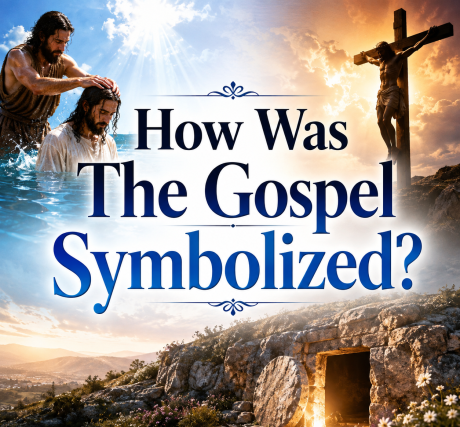
The history of the gospel becoming symbolized does not simply show a change in theology, but reveals the process by which God’s work of salvation gradually became philosophized and institutionalized within human understanding. The baptism and the Cross of Jesus were originally one complete event of salvation, but as time passed, their meaning was transformed into symbols and institutions.
The period of the Early Church was the time when the apostles and disciples directly preached the words of Jesus and believed in baptism and the Cross as one event of salvation. They clearly proclaimed the gospel that Jesus received baptism from John, took the sins of the world upon His own body, and atoned for those sins on the Cross. To them, the gospel was not merely a doctrine or ritual but an actual event of the remission of sins, and being “born again of water and the Spirit” was proclaimed as the core of salvation.
However, after the apostles passed away and the Church Fathers’ era began, the gospel started to be influenced by philosophy and apologetics. The early Church Fathers tried to explain the gospel through Greek philosophy and logic, and as a result, the experiential essence of the gospel was gradually shifted into theoretical interpretation.
Baptism was partially transformed from being the actual means of the remission of sins into a ceremony of entering the community of faith, and the gospel began to be understood in the form of a “mystical ritual.” Beginning with the Council of Nicaea in AD 325, the gospel entered the path of doctrinal formalization.
The Council clearly distinguished the divinity and humanity of Jesus and established the doctrine of the Trinity, but the event in which Jesus was baptized by John and took upon Himself the sins of the world was excluded from the Creed.
From that time, baptism came to be regarded only as a symbol of the Holy Spirit, and the focus of faith was reduced from the union of baptism and the Cross to a Cross-centered faith. As the gospel was systematized around doctrines and creeds, it gradually changed from the actual event of salvation into a declaration of faith.
When the papal authority was strengthened in the medieval Catholic era, the gospel became further institutionalized and was transformed into a sacrament-centered structure. The Church established itself as the only channel of grace, teaching baptism as a rite for washing away original sin and the Eucharist as a ceremony in which the sacrifice of the Cross was repeatedly reenacted.
The essence of the gospel changed from “faith” to the “performance of rituals,” and salvation was regarded as something granted only through the Church. As a result, the gospel was gradually replaced by symbols and ceremonies, and the meaning of the actual event of redemption became obscure.
- Before

