English 49
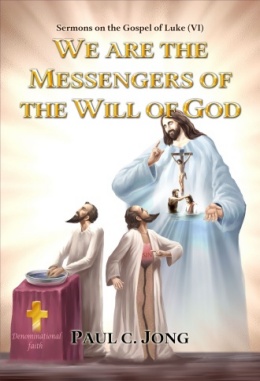
Sermons on the Gospel of Luke (VI) - WE ARE THE MESSENGERS OF THE WILL OF GODRev. Paul C. Jong

Hello, This is a review of the book entitled We Are the Messengers of the Will of God by Rev. Paul C. Jong. The title of Chapter One is "Let Us Believe in the Righteousness of God." It focuses on the question of what is true faith, using the parable of the rich man and Lazarus as its central text. Looking at these passages in the Bible, most people tend to summarize that individuals are either condemned to hell or are welcomed into Heaven based on how they treat others throughout their lives. If they do many good deeds, help the poor, and generally maintain a kind disposition, they are welcomed into God`s arms; but if they live selfishly and fail to obey the commandments they will be rejected by the Lord.
However, this interpretation centers salvation on human righteousness rather than on the righteousness of God. On the contrary, the Bible teaches that only God is truly good, and we human beings do not have the ability to live without sinning. Therefore, the author explains that there is no other way to enter Heaven except through faith in the righteousness of God, which was fulfilled through the baptism of Jesus. This alone is the one and only gateway to eternal life.
Sermon 2 is titled "People with Servant Hearts for God." Drawing from the account of the unjust steward in the Gospel of Luke 16:8–13, this sermon invites the reader to reflect on whether they should live as a shrewd servant of God or as a servant of man. This question is of great importance, especially since the Bible reminds us that we cannot serve both God and mammon. If we are to be faithful, to whom should we be faithful? Who deserves our faithfulness? We must carefully consider what is most profitable—not only in this life but also in the life to come. The person who does not go through this decision-making process is said to be unwise.
This book serves as a guide to the born again who seek to live wisely. To be shrewd in serving the Lord benefits not only the Kingdom of God but also provides the most fitting and proper way of life for those who have received the blessing of the remission of all their sins. The author draws from the account of the days of Noah, when men were eating, drinking, and marrying until the day that Noah entered the ark and the flood came and destroyed them all. This serves as a reminder that the day of the Lord’s return will be like the days of Noah. Therefore, our hearts must gradually detach from the things of this world, lest we be overcome by selfish desires and fail in our duty to share the beautiful gospel with the world because of spiritual blindness blinded by lust and faithlessness. As the Lord warns in Luke 9:24, “For whoever desires to save his life will lose it.”
In another sermon, the main topic is how the Lord transforms sinners into the righteous. Focusing on the account of the Pharisee and the tax collector in Luke 18:9–14, we are reminded that the Lord justifies those like the tax collector who cannot even lift up their eyes to Heaven because of their awareness of their sin, and instead cry out for the mercy of God. Such individuals are those whom God finds and cleanses completely, washing their hearts through the baptism of Jesus.
Throughout his sermons, the author explores the Godly wisdom behind why the rich in heart cannot enter the Kingdom of God. For such people, their entire religious identity is bound up in their perceived human goodness—which, in truth, is no goodness at all. This is why Jesus says, “How hard is it for those who have riches to enter the Kingdom of God?” The only way for salvation to come to such people is for them to become poor in spirit, cast aside their facade of goodness, and believe in the righteousness of God that Jesus fulfilled by washing away the sin of the world at His baptism by John the Baptist, receiving the judgment for our sins on the cross and rising from the dead the third day.
I also came to understand from reading this book that those who have little to boast of in a worldly sense are often the ones most eager to meet the Lord, despite their obvious flaws. While discussing the backstory of a tax collector named Zacchaeus, who climbed up into a sycamore tree to catch a glimpse of Jesus as He was passing through his town, the author explains that it is people like Zacchaeus—those who are looked down upon and who have done many wrongs to others—who have an immense desire to meet God, confess their sins, and change their way of life from serving themselves to serving God with a willing heart. Zacchaeus was most likely dishonest, yet when he met Jesus, he confessed his sins and held onto the hope that through encountering the Lord and being born again, he could become a servant of righteousness by faith in the baptism and the blood of Jesus.
In conclusion, if we receive the blessing of hosting Jesus in our hearts and homes, then it is both our duty and honor to serve Him as our Lord and allow Him to reign in our hearts as King. This is the right path for the righteous. The author warns to be careful not to become like the unfaithful servant described in the parable in Luke 19:11–27. If we choose to live a faithless life after receiving the fullness of God’s grace and salvation, He will not accept our excuses but rather cast us out of His presence forevermore. The nobleman in this parable represents our Lord Jesus Christ, who has not only washed away all of our sins through His baptism by John the Baptist, but who has also sent the Holy Spirit of promise into our hearts. For this reason, let us all put our trust wholly in the Lord of glory and pray that we may multiply the good works of Jesus while we are entrusted with His ministry as the messengers of the will of God. Amen.

Copyright © 2021 by The New Life Mission